
Cosmovisions Of The South
– Vernissage – VVK -/ AK -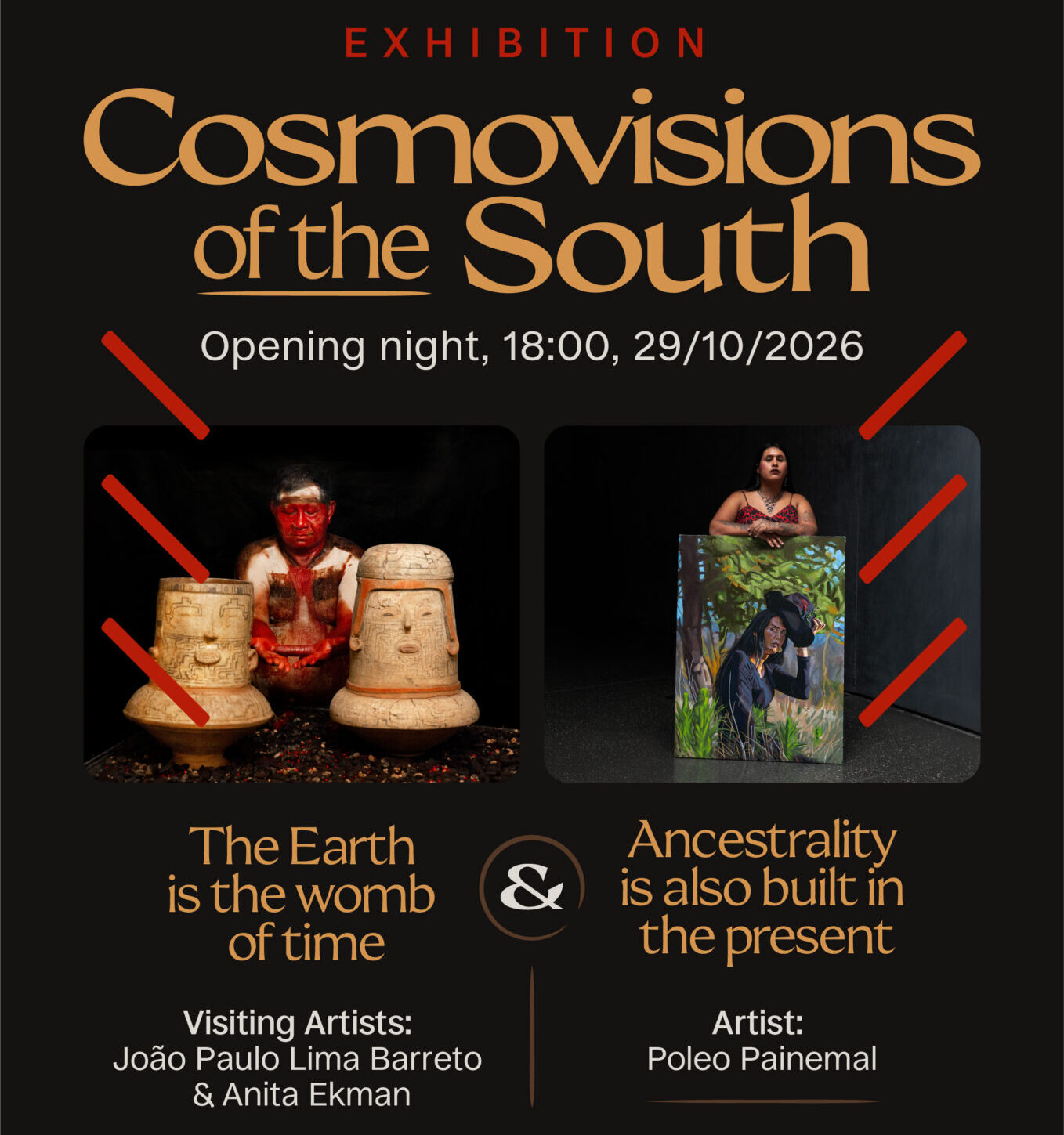
Beginn: 18:00
Einlaß: 18:00
„Cosmovisions of the South“
FSU-Exzellenzcluster „Imaginamics“ eröffnet Doppelausstellung indigener Kunst in Jena
Das Gleichstellungs- und Diversitätsbüro des Jenaer Exzellenzclusters „Imaginamics“ eröffnet am 29. Oktober 2026 um 18.00h im Trafo eine Doppelausstellung indigener Kunst mit dem Titel „Cosmovisions of the South“ / „Kosmovisionen des Südens“.
Vor dem Hintergrund der Frage, wie Gesellschaften und ihre Akteure ihre Geschichte, Gegenwart und Zukunft in sozialen Praktiken imaginieren und gemeinsame Vorstellungen, Bilder und Narrative hervorbringen, führt die Ausstellung indigene künstlerische und wissenschaftliche Forschungspositionen aus dem südlichen Lateinamerika zusammen. Kunst wird hier als Medium und dynamischer Raum des Neuerstarkens und der kollektiven Selbstermächtigung kultureller Identitäten verstanden, die insbesondere subalternisierten nicht-okzidentalen Kulturen die Möglichkeit zur Neukonstitution gibt.
Im Zentrum der Ausstellung steht die kritische Dekonstruktion eurozentrischer Blickregime, die indigene Gemeinschaften, ihr Wissen und ihre Kosmologien historisch musealisiert, exotisiert oder in eine als abgeschlossen gedachte Vergangenheit verbannt haben. „Cosmovisions of the South“ begreift indigene Kosmovisionen, Philosophien und künstlerische Praktiken stattdessen als lebendige, relationale Projektionsflächen des Widerstands. Sie zeigen eindrücklich, wie durch die visuelle und narrative Reimagination von Geschichte und Gegenwart neue, dekoloniale Zukunftsentwürfe im Hier und Jetzt geformt werden.
Der erste Ausstellungsteil, aus Brasilien, „The Earth is the Womb of Time“ / „Die Erde ist der Schoß der Zeit“, unter Mitwirkung von João Paulo Lima Barreto und Anita Ekman, verbindet zeitgenössische Kunst, indigenes Wissen, Archäologie und geoanthropologische Forschung. Der Titel geht auf den indigenen Archäologen Carlos Augusto da Silva („Tijolo“) zurück, der den Amazonas-Regenwald als Kin versteht, als eine verwandtschaftliche Präsenz der Ahnen mit eigener Stimme, Geschichte und Handlungsfähigkeit, und damit alternative Wege zum Weltverständnis vorschlägt.
Die gezeigten Arbeiten – darunter Werke der Awaete-Künstlerinnen Kumé Assurini und Murapijawa Assurini sowie das transdisziplinäre Projekt „Atlas Brasiliensis“ (in Zusammenarbeit mit Ivan Lima Barreto, den Künstlerinnen Anita Ekman und Frauke Zabel sowie dem Historiker Freg J. Stokes vom Max-Planck-Institut für Geoanthropologie) – setzen sich kritisch mit dem kolonialen Erbe europäischer Sammlungen auseinander. Sie streben ein Verständnis der biologischen Vielfalt und Kultur des Amazonasgebiets an, das sie nicht als bloße Ressource, sondern als vielschichtiges Territorium des Wissens zur Erhaltung und Regeneration von Ökosystemen erfahrbar machen. Der zweite Ausstellungsteil, aus Chile, mit dem Titel „Ancestrality is also built in the present“ /
„Anzestralität wird auch in der Gegenwart konstruiert“, widmet sich dem malerischen Werk der Mapuche-Travesti-Künstlerin Poleo Painemal. Gegen die kolonisierende Haltung, Indigenität auf folkloristische Artefakte oder Kunsthandwerk zu reduzieren, begründet Painemal mit ihrer Strömung des "Realismo Travesti" eine kraftvolle, indigen-queere Präsenz im
europäischen und bürgerlichen Genre der Porträtkunst.
Mapuche bedeutet „Menschen der Erde“. Basierend auf dem Ñütram, der traditionellen Mapuche-Praxis des horizontalen, beziehungsstiftenden Gesprächs, erforscht Poleo Painemal die untrennbare Einheit von Körper und Erde/Land (Cuerpo-Territorio). Ihre Porträts geben indigenen und afrodeszendenten Trans-, Travesti- und nicht-binären Personen durch die Konsequenz der vollständigen Einschreibung ihrer Ahnen- und Familiennamen oder durch die Situierung im ursprünglichen Mapuche-Gebiet ihre historische Würde zurück. Ihr künstlerisches Schaffen verdichtet sich in einem ökologisch-politischen Manifest: „Wenn das cis-binäre Geschlecht eine Monokultur ist, sind wir Travestis der ursprüngliche Mischwald“.
Vernissage und allgemeine Informationen
Die feierliche Eröffnung findet am Donnerstag, den 29. Oktober 2026, um 18:00 Uhr im Trafo (Nollendorfer Straße 30, 07743 Jena) statt. Hier führen die Künstler:innen (auf Portugiesisch, Englisch, Spanisch und Deutsch) die geladene Presse wie auch die interessierte Öffentlichkeit durch die beiden Teilausstellungen und laden zu einer vertieften Auseinandersetzung mit dekolonialer Kunstpraxis, gesellschaftlichen Zukunftsentwürfen und indigenem Wissen und Imaginieren ein.
gez. Hammerschmidt / Roberts
– English –
„Cosmovisions of the South“
FSU Cluster of Excellence „Imaginamics“ Opens Dual Exhibition of Indigenous Art in Jena
On October 29, 2026, at 6:00 p.m., the Equality and Diversity Office of the Jena Cluster of Excellence „Imaginamics“ will inaugurate a dual exhibition of Indigenous art entitled „Cosmovisions of the South“ / „Kosmovisionen des Südens“ at Trafo (Nollendorfer Straße 30, Jena).
Against the backdrop of how societies and their actors imagine their history, present, and future through social practices and generate shared ideas, images, and narratives, the exhibition brings together Indigenous artistic and scholarly research perspectives from southern Latin America. Art is understood here as a medium and a dynamic space for the re-empowerment and collective self-
determination of cultural identities – giving subalternized, non-Western culturesthe opportunity for self-reconstitution.
At the core of the exhibition is the critical deconstruction of Eurocentric regimes of vision and representation, which have historically museumalized, exoticized, or banished Indigenous communities, their knowledge, and their cosmologies into a supposedly closed past. „Cosmovisions of the South“ instead conceives Indigenous cosmovisions, philosophies, and artistic practices as living, relational sites of resistance. They powerfully demonstrate how the visual and narrative reimagination of history and the present shapes new, decolonial visions of the future in the here and now.
The first part of the exhibition, from Brazil, entitled „The Earth is the Womb of Time“ / „Die Erde ist der Schoß der Zeit“, developed with the participation of João Paulo Lima Barreto and Anita Ekman,
brings together contemporary art, Indigenous knowledge, archaeology, and geoanthropological research. The title originates from Indigenous archaeologist Carlos Augusto da Silva („Tijolo“), who conceives the Amazon rainforest as Kin – a kinship-based presence of the ancestors with its own voice, history, and agency – and thus proposes alternative ways of understanding the world.
The works on display – including pieces by Awaete artists Kumé Assurini and Murapijawa Assurini, as well as the transdisciplinary project „Atlas Brasiliensis“; (in collaboration with Ivan Lima Barreto, artists Anita Ekman and Frauke Zabel, and historian Freg J. Stokes of the Max Planck Institute for Geoanthropology) – critically engage with the colonial legacy of European collections. They seek to
foster an understanding of the biological diversity and culture of the Amazon region, experiencing it not merely as a resource but as a multifaceted territory of knowledge for the preservation and regeneration of ecosystems.
The second part of the exhibition, from Chile, entitled „Ancestrality is also built in the present“ / „Anzestralität wird auch in der Gegenwart konstruiert“, is dedicated to the paintings of Mapuche trans artist Poleo Painemal. In opposition to the colonizing tendency to reduce indigeneity to folkloric artifacts or handicrafts, Painemal establishes a powerful, Indigenous-queer presence within the European and bourgeois genre of portraiture through her movement „Realismo Travesti“.
Mapuche translates to „People of the Earth“. Grounded in Ñütram – the traditional Mapuche practice of horizontal, relationship-building dialogue –, Poleo Painemal explores the inseparable unity of body and earth/land (Cuerpo-Territorio). Her portraits restore historical dignity to Indigenous and Afro-descendant trans, travesti, and non-binary individuals by consistently including their full ancestral and family names or by situating them within their ancestral Mapuche territory. Her artistic creation condenses into an ecological-political manifesto: „If cis-binary gender is a monoculture, then we travestis are the native mixed forest“.
Opening Reception and General Information
The opening reception will take place on Thursday, October 29, 2026, at 6:00 p.m. at Trafo (Nollendorfer Straße 30, 07743 Jena). During the vernissage, the artists will guide the invited press and interested public through both parts of the exhibition in Portuguese, English, Spanish, and German, and invite them to engage more deeply with decolonial artistic practices, social visions of the
future, and Indigenous knowledge and imagining.
gez. Hammerschmidt / Roberts